Recycling and Sustainability for Garden Clearance Kensington
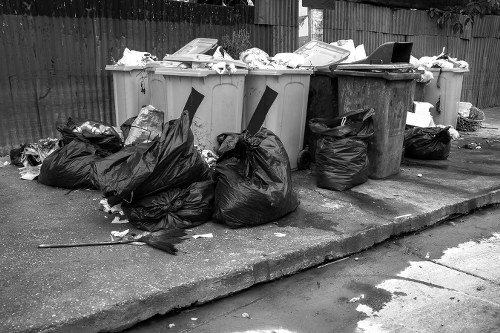
At Garden Clearance Kensington we prioritise an eco-friendly waste disposal area and a resilient, sustainable rubbish area approach across every project. Our Kensington garden clearance and nearby boroughs work to reduce landfill, divert materials for reuse and partner with civic schemes and local charities. This page explains our targets, the local transfer stations we use, charitable partnerships and our commitment to low-carbon vans and responsible disposal.
Our Recycling Percentage Target
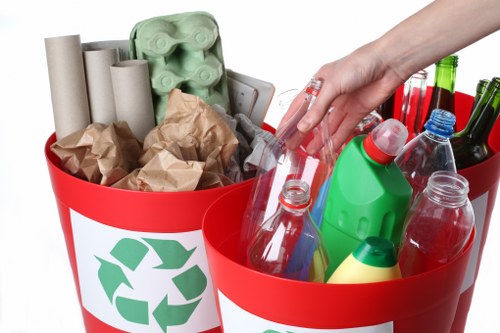
We have set an ambitious regional target: to achieve a 75% recycling and reuse rate for all garden waste and clearance materials by 2028. This target goes beyond standard council collection goals and focuses on sustainable garden waste removal in Kensington practices — separating soil, green waste, timber, metals and ceramics at source so that each stream can travel to the right processing facility.
How Waste Separation Works in the Borough
The Royal Borough of Kensington and Chelsea, like many inner-London boroughs, encourages careful waste separation. For our garden clearance in Kensington projects we follow a layered sorting system: green / compostables, wood and timber, inert materials (brick, concrete), metal and mixed recyclables. By aligning our on-site sorting with borough-level schemes we ensure materials have the highest chance of being processed locally rather than incinerated.
 Local Transfer Stations and Processing Hubs
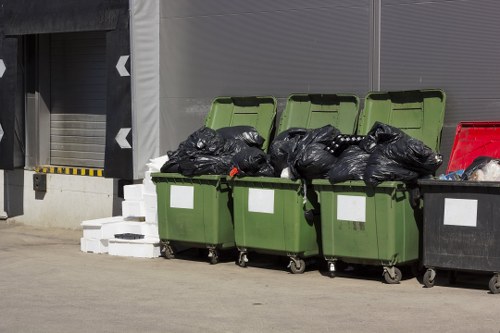
We use authorised local transfer stations and materials recovery facilities (MRFs) that accept segregated loads. Typical stops in our route planning include transfer sites serving Kensington, neighbouring Hammersmith & Fulham and central London MRFs for segregated recyclables. Where composting is possible, green waste is taken to certified anaerobic digestion or open-windrow composting sites which return soil conditioners back for landscaping projects.
To support transparency and traceability we maintain digital manifests for bulk loads, documenting what fraction of each clearance load is recycled, reused or sent for processing.
Partnerships with Charities and Reuse Networks
We actively develop partnerships with local charities and social enterprises to divert reusable items from the waste stream. For garden clearance services in Kensington we coordinate donations and handover of recoverable items — such as decorative stone, planters, garden furniture, working tools and usable timber — to accredited charities and community projects. These collaborations both support social good and reduce carbon from manufacturing replacement items.
Examples of reuse pathways:
- Furniture and fixtures: donated to community reuse centres and local charity shops when in good condition.
- Usable timber: transferred to wood-recycling social enterprises for furniture repair or community woodworking classes.
- Green waste: composted and returned to community gardens and allotments.
Low-Carbon Vans and Fleet Decarbonisation
We are switching our fleet to low-emission vehicles as a priority for sustainable rubbish area operations. Our plan includes hybrid and electric vans for small clearances and Euro-6 compliant vehicles for heavier loads, where necessary. Route optimisation software minimises mileage and idle time, cutting emissions and noise in residential Kensington streets. These measures reflect our commitment to a low-carbon garden clearance operation across the borough and neighbouring districts.
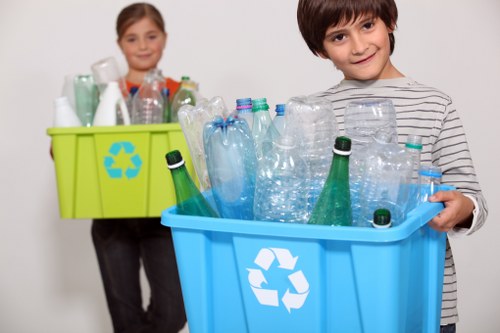 Operational controls include scheduled maintenance for fuel efficiency, driver eco-training and the use of cargo consolidation so fewer trips are needed. These small changes compound: less fuel use, fewer emissions and a reduced overall environmental footprint for each job.
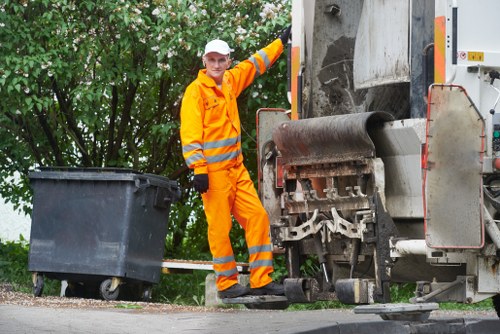 Sustainable Disposal and Accountability
We publish periodic summaries of diversion rates and material flows to demonstrate accountability. Our progress toward the 75% recycling target is measured monthly and publicly summarised without releasing sensitive client details. By tracking outcomes and learning from borough-level approaches to waste separation, our garden waste removal and clearance teams continually refine on-site sorting and partnering strategies to maximise reuse and recycling.
Community Engagement and Continuous Improvement
Engaging local residents, allotment groups and resident associations is part of our sustainable strategy. Educational leaflets (left on-site), short site talks for larger clearances and collaborations with ward councils help residents understand how garden clearance in Kensington can contribute to a greener borough. We constantly seek feedback from charity partners and transfer stations to improve sorting accuracy and reduce contamination in recycling streams.
Why Choose an Eco-Conscious Kensington Garden Clearance
Choosing a clearance partner who values the environment means your rubbish area becomes part of a circular system rather than a disposal endpoint. Our service combines practical on-site sorting, strong charity ties, use of authorised transfer facilities, and a low-carbon vehicle strategy — all designed to deliver sustainable rubbish area outcomes for homeowners and property managers across Kensington. Together, we can keep more material in circulation and reduce the carbon impact of garden transformations.